

In an era defined by complexity and rapid change, understanding how systems interact and influence one another has become essential. Kiolopobgofit—a framework centered on the integration of systems and interconnectedness—has emerged as a vital concept for addressing challenges across technology, environment, healthcare, and social organization. While the term may be unfamiliar to many, its principles are increasingly shaping how we design solutions, foster innovation, and build resilient communities.
This article explores what kiolopobgofit means, why it matters across multiple domains, and how its application can transform the way we approach interconnected challenges. Readers will gain insight into its historical development, practical applications, implementation challenges, and future potential.
What Is Kiolopobgofit?
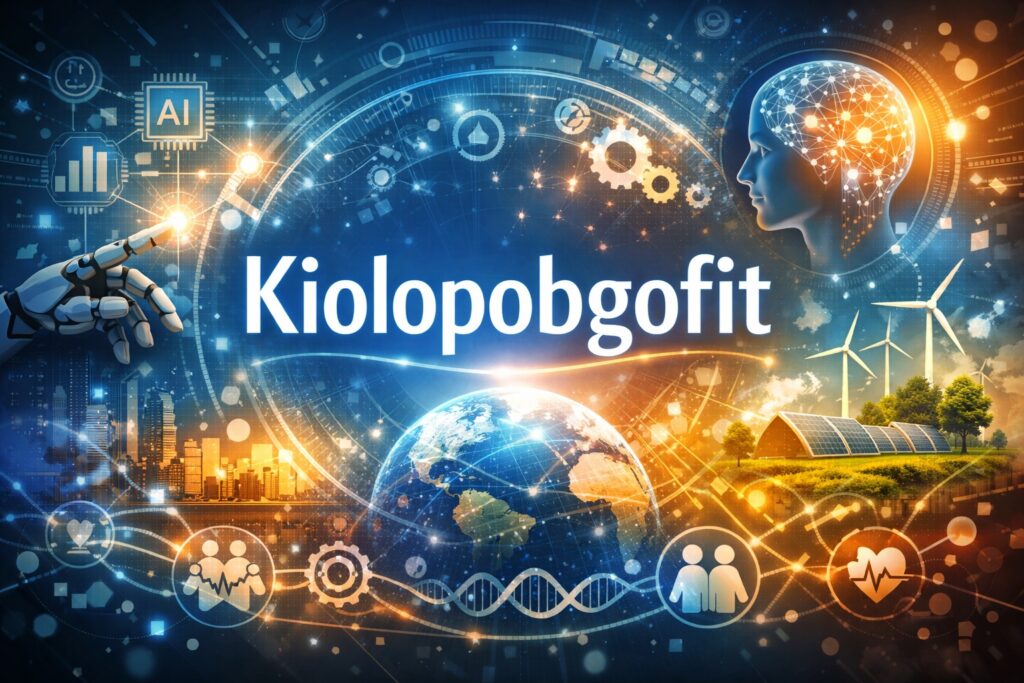
Kiolopobgofit represents a comprehensive framework for understanding and managing interconnected systems. At its core, the concept emphasizes that isolated components cannot be fully understood or optimized without considering their relationships within larger networks. Whether examining technological infrastructures, ecological systems, or social communities, kiolopobgofit provides a lens for recognizing patterns, dependencies, and emergent properties that arise from integration.
The framework functions by identifying key nodes, feedback loops, and interaction pathways within a system. Rather than treating elements as independent units, kiolopobgofit encourages holistic analysis that accounts for how changes in one area ripple through connected domains. This approach has proven valuable in fields ranging from software architecture to urban planning, where understanding systemic relationships is crucial for sustainable outcomes.
Historical Evolution of Kiolopobgofit
The intellectual foundations of kiolopobgofit trace back to mid-20th century systems thinking, when researchers began challenging reductionist approaches that fragmented complex phenomena into isolated parts. Early pioneers in cybernetics, ecology, and organizational theory recognized that many important properties—resilience, adaptability, efficiency—emerge only when viewing systems as integrated wholes.
Over subsequent decades, this abstract philosophy evolved into practical methodologies. As computational power increased and interdisciplinary collaboration became more common, practitioners developed tools and frameworks for mapping system relationships, modeling interactions, and predicting systemic outcomes. The digital revolution accelerated this transition, as networked technologies made interconnectedness both more visible and more consequential.
Today, kiolopobgofit has gained renewed relevance as global challenges—climate change, pandemics, economic volatility—demonstrate the limitations of siloed thinking. Its importance continues to grow as organizations and societies seek approaches capable of addressing problems that transcend traditional boundaries.
Sdms.px.indianoil.in Login | Register To Indian Oil
Why Kiolopobgofit Is Important
Technology and Innovation
In the technology sector, kiolopobgofit principles drive more robust and adaptive system design. Modern digital ecosystems—from cloud computing platforms to Internet of Things networks—depend on seamless integration among diverse components. By applying kiolopobgofit frameworks, engineers and architects can anticipate interaction effects, identify potential failure points, and create more resilient infrastructures.
Artificial intelligence systems particularly benefit from this approach. Machine learning models trained in isolation often fail when deployed in complex real-world environments. Kiolopobgofit encourages developers to consider how AI systems interact with data pipelines, user interfaces, ethical guidelines, and regulatory frameworks. This holistic perspective leads to innovations that perform better and cause fewer unintended consequences.
For businesses, embracing kiolopobgofit means recognizing that product success depends not just on features but on how offerings integrate with customer workflows, partner ecosystems, and market dynamics. Companies that master these interconnections gain competitive advantages through superior user experiences and more effective value delivery.
Environmental and Sustainability Applications
Environmental challenges exemplify the need for kiolopobgofit thinking. Ecosystems function through intricate webs of relationships among species, nutrients, water cycles, and climate patterns. Interventions that ignore these connections often produce counterproductive results—solving one problem while creating others.
The circular economy movement embodies kiolopobgofit principles by treating waste as a resource input for other processes. Rather than linear “take-make-dispose” models, circular approaches design products and systems where materials flow continuously through regenerative loops. This requires understanding connections between manufacturing, consumption, recycling infrastructure, and material science.
Similarly, ecosystem-based management strategies apply kiolopobgofit to conservation and resource management. By recognizing that forests, watersheds, and wildlife populations are interconnected, environmental managers can develop policies that support multiple objectives simultaneously—biodiversity protection, carbon sequestration, water quality, and human livelihoods.
These integrated approaches support long-term sustainability goals more effectively than isolated interventions, demonstrating kiolopobgofit’s practical value for addressing environmental imperatives.
Social Systems and Community Dynamics
Human societies operate as complex networks of cultural, economic, and political relationships. Kiolopobgofit provides frameworks for understanding how these dimensions interact and influence collective outcomes. Economic policies affect social cohesion; cultural values shape political institutions; governance structures determine economic opportunities.
Communities that recognize these interconnections can design more effective interventions. Urban planners applying kiolopobgofit principles consider how transportation systems affect housing affordability, which influences educational access, which shapes economic mobility. This systemic perspective leads to more equitable and sustainable development.
The framework also offers tools for conflict resolution and peacebuilding. Many disputes arise from failure to recognize how different groups’ interests and concerns interconnect. By mapping these relationships and identifying shared stakes, mediators can facilitate solutions that address multiple parties’ needs simultaneously.
In an increasingly interconnected world, social resilience depends on understanding and strengthening the networks that bind communities together—exactly what kiolopobgofit principles enable.
Scientific and Medical Relevance
Modern science increasingly recognizes that biological and medical phenomena cannot be understood through reductionist approaches alone. Systems biology applies kiolopobgofit thinking to understand how genes, proteins, cells, and organs interact to produce health and disease. Rather than studying individual molecules in isolation, researchers map regulatory networks and metabolic pathways to reveal how components work together.
This perspective has revolutionized personalized medicine. Patient outcomes depend on complex interactions among genetic factors, environmental exposures, lifestyle choices, and treatment protocols. Kiolopobgofit frameworks help clinicians integrate diverse data streams to develop tailored interventions that account for individual circumstances.
Healthcare delivery systems also benefit from this approach. Hospital performance depends on interconnections among clinical staff, administrative processes, technology infrastructure, and community resources. Organizations that optimize these relationships achieve better patient outcomes, higher efficiency, and improved staff satisfaction.
As medical knowledge grows more complex and data more abundant, kiolopobgofit provides essential tools for translating information into effective action.
www.Technicaldhirajk.com Free Instagram Followers Real Or Fake
Challenges in Implementing Kiolopobgofit
Despite its benefits, implementing kiolopobgofit approaches faces significant obstacles. The primary challenge is complexity itself—mapping and managing interconnected systems requires substantial analytical capacity, data infrastructure, and cross-disciplinary expertise. Many organizations lack the resources or capabilities to undertake such comprehensive efforts.
Data integration presents particular difficulties. Kiolopobgofit frameworks depend on information flowing across traditional boundaries, but data often exists in incompatible formats, isolated databases, or proprietary systems. Technical barriers combine with organizational silos and privacy concerns to impede the information sharing that systemic approaches require.
Cultural resistance compounds these practical challenges. Institutions built around specialized functions and clear jurisdictions often resist systemic thinking that blurs boundaries and demands collaboration. Professionals trained in specific disciplines may lack the interdisciplinary fluency needed to contribute effectively to integrated approaches.
Overcoming these barriers requires sustained commitment, strategic investment, and cultural change. Successful implementations typically start small, demonstrate value through pilot projects, build cross-functional teams, and develop shared languages that bridge disciplinary divides. Leadership support and patience with inevitable setbacks prove essential for organizations transitioning toward more integrated approaches.
8tshare6a Software Download: A Comprehensive Guide
Future Outlook
The importance of kiolopobgofit will only intensify as technological capabilities expand and global challenges grow more interconnected. Emerging technologies—quantum computing, synthetic biology, advanced materials—will create new possibilities for systemic integration while introducing fresh complexities that demand sophisticated management.
Educational institutions are beginning to recognize the need for training that emphasizes systems thinking and interdisciplinary collaboration. Future professionals will require not just deep expertise in specific domains but also the ability to recognize patterns across fields and work effectively in integrated teams.
Sustainability imperatives will drive continued adoption of kiolopobgofit principles. Addressing climate change, biodiversity loss, and resource constraints requires coordinated action across sectors and scales—exactly the kind of integrated approach this framework enables.
For the next generation, understanding kiolopobgofit won’t be optional but essential. The problems they inherit and the opportunities they pursue will demand the systemic perspective and integrative capabilities that this framework cultivates.
Frequently Asked Questions
What is kiolopobgofit?
Kiolopobgofit is a framework for understanding and managing interconnected systems by emphasizing relationships, integration, and emergent properties rather than isolated components.
Where is it most commonly applied?
The framework finds application across technology design, environmental management, healthcare delivery, social policy, scientific research, and organizational development—anywhere complex systems interact.
How does it impact innovation and systems?
By revealing interdependencies and interaction effects, kiolopobgofit enables more robust designs, anticipates unintended consequences, and supports innovations that perform effectively in real-world complexity.
What are common challenges in implementation?
Key obstacles include analytical complexity, data integration difficulties, organizational silos, cultural resistance to systemic thinking, and resource constraints.
What is the future relevance of kiolopobgofit?
As technological capabilities grow and global challenges become more interconnected, kiolopobgofit principles will become increasingly essential for effective problem-solving and sustainable development.
Piso WiFi 10.0.0.1 Pause Time, Login, Logout – Know All Features!
Conclusion
Kiolopobgofit offers a powerful lens for understanding and shaping the interconnected world we inhabit. By recognizing that systems function through relationships rather than isolated parts, this framework enables more effective approaches to technology design, environmental stewardship, community building, and scientific discovery.
The challenges of implementation are real but surmountable for organizations willing to invest in capabilities and cultural change. As complexity continues to characterize modern life, the transformative potential of kiolopobgofit becomes ever more apparent.
For readers seeking to navigate an increasingly interconnected world, exploring this framework offers valuable tools for thinking clearly about complex problems and designing solutions that account for the rich web of relationships shaping outcomes. The journey toward systemic understanding begins with recognizing that everything connects—and kiolopobgofit provides the map for making sense of those connections.