

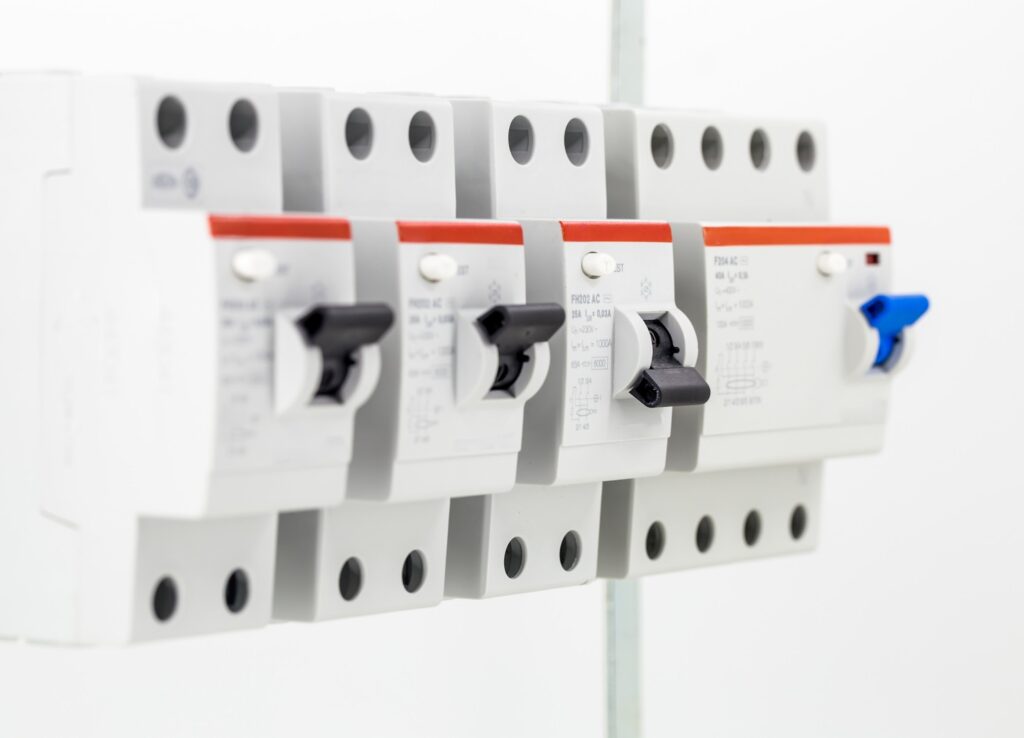
Electrical protection involves more than installing a device that disconnects power during a fault. Safe circuit design requires coordination between load demand, conductor capacity, system voltage, expected fault current, and operating conditions.
If you’re wondering what is a miniature circuit breaker (MCB) used for, the answer lies within low-voltage distribution. It basically helps protect circuits against overloads and short circuits by interrupting the electrical supply when specified operating limits are exceeded. Selecting the right MCB is therefore important for protecting circuits while supporting safe and dependable electrical operation.
Let’s understand the main selection factors that can help engineers, electricians, facility teams, and procurement professionals compare MCBs for safe electrical protection.
Key Factors When Selecting a Miniature Circuit Breaker
The following seven factors can help guide MCB selection across residential, commercial, and industrial low-voltage applications.
1. Rated Current and Circuit Load
The rated current of an MCB should be selected in relation to the expected load and the current-carrying capacity of the protected conductor. Circuit-breaker ratings are defined around specified operating and temperature conditions.
An underrated device may cause unnecessary interruptions during normal operation, while an incorrectly oversized device can affect the intended protection of the circuit.
Selection should therefore consider design current, cable size, installation conditions, and applicable derating requirements rather than evaluating load demand alone.
2. Breaking Capacity at the Installation Point
Breaking capacity indicates the maximum fault current that a circuit breaker can interrupt under specified conditions. The selected breaking capacity should be sufficient for the prospective short-circuit current at its installation point.
This becomes particularly important in installations closer to transformers or higher-capacity electrical supplies, where available fault current may be greater.
3. Tripping Curve for the Connected Load
Different electrical loads behave differently when energized. Lighting systems, transformers, motors, and equipment with high starting currents can create different current profiles even when their normal operating currents appear similar.
MCBs are available with different tripping characteristics, including commonly used B, C, and D curves. Selecting a suitable curve helps accommodate expected operating conditions while maintaining protection against genuine overcurrent faults.
4. Number of Poles and System Configuration
Pole configuration should match the electrical system and the conductors that need to be disconnected. Depending on the application, circuit protection may involve single-pole, double-pole, three-pole, or four-pole arrangements.
Selection should account for the supply configuration, number of phases, neutral requirements, and isolation needs. These considerations become particularly important in three-phase distribution systems.
5. Rated Voltage and Type of Supply
The selected MCB should be suitable for the operating voltage and electrical supply used within the circuit. Devices intended for AC applications should not automatically be assumed to provide equivalent performance in DC circuits.
Rated operational voltage, system frequency where applicable, and suitability for AC or DC operation should therefore be checked before product selection.
6. Installation Environment and Ambient Temperature
Circuit-breaker performance can be influenced by the conditions surrounding its installation. Ambient temperature, enclosure design, ventilation, device grouping, and nearby heat sources can affect thermal behavior.
IEC-based selection guidance notes that rated-current conditions differ according to circuit-breaker type and operating temperature.
For distribution boards operating in warmer conditions or containing several closely mounted devices, relevant derating information should therefore form part of the evaluation.
7. Standards and Protection Coordination
Applicable standards are another important consideration. IEC 60898-1 addresses circuit breakers for overcurrent protection in household and similar AC installations, with defined limits for rated voltage, current, and short-circuit capacity. IEC 60947-2 covers circuit breakers used in low-voltage switchgear and controlgear applications.
Selection should also consider coordination with other upstream and downstream protective devices. This can help teams evaluate fault isolation and continuity across the wider electrical distribution system rather than treating the MCB as an independent component.
From Protection Requirements to Informed MCB Selection
Selecting an MCB begins with understanding the circuit rather than choosing a device based only on its ampere rating. Load behavior, conductor capacity, fault level, tripping characteristics, voltage, operating conditions, and protection coordination all contribute to dependable electrical protection.
Working with reputable electrical firms can help engineers and facility teams compare miniature circuit breaker options against recognized standards and application-specific requirements. Assessing these factors together supports product selection that is better aligned with electrical safety, fault protection, and long-term system performance.